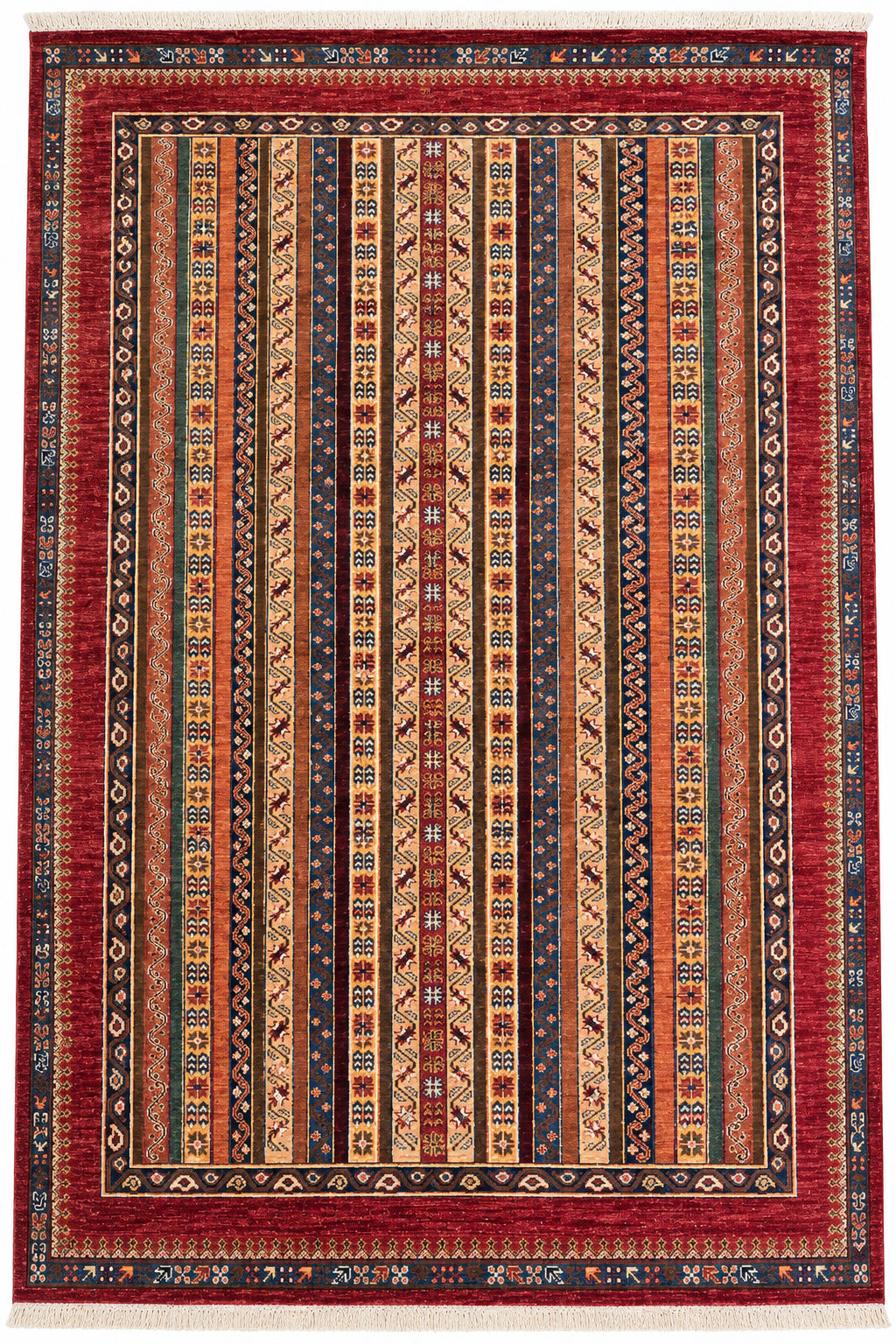
Khurjin
A pattern built to be carried.
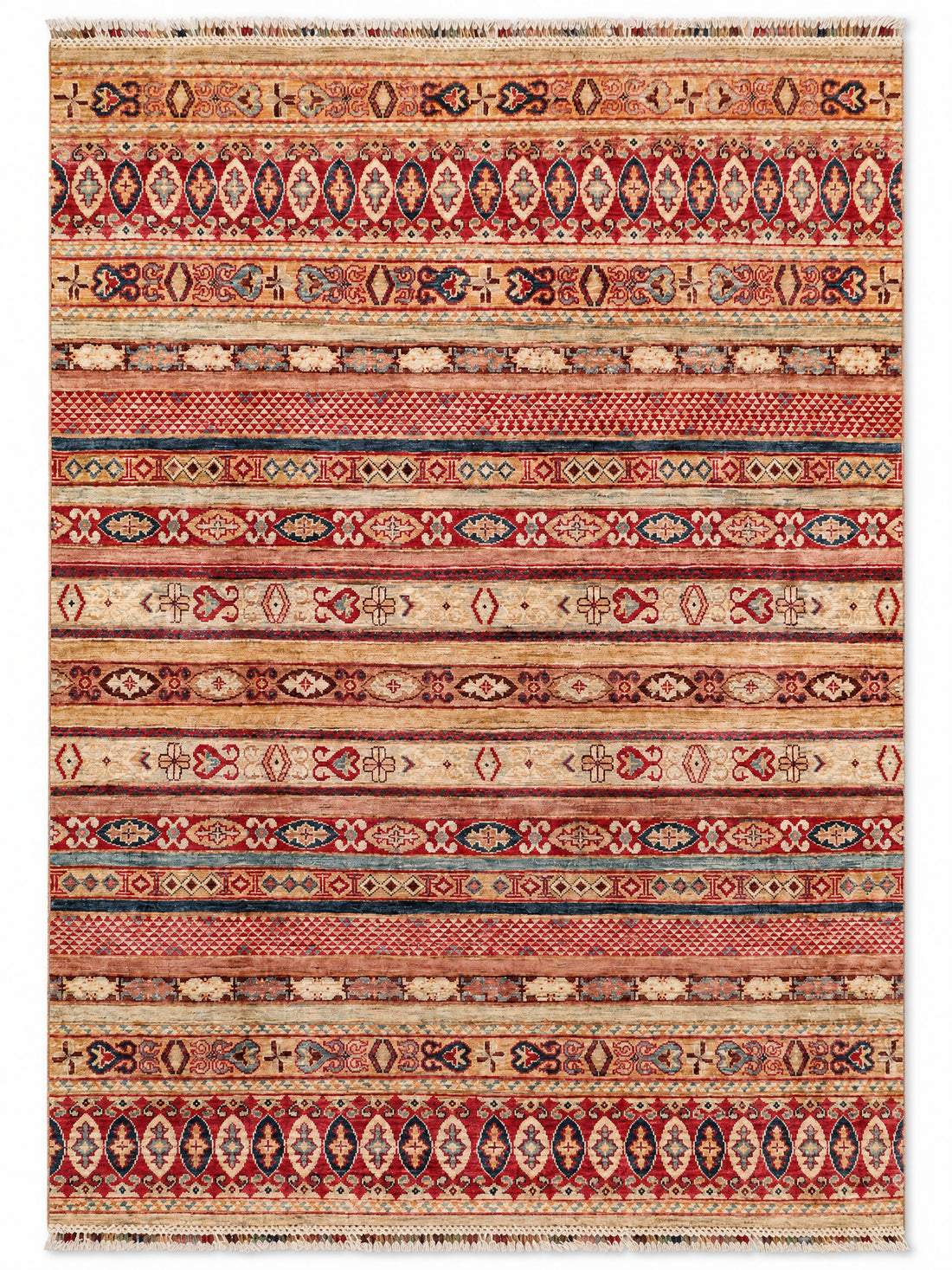
Khurjin begins as a saddlebag — woven in one piece, folded over an animal, carried between camps. The Loomish collection presents that inheritance through Rhythm and Caravan: banded fields, bordered compartments, and motifs gathered along a route rather than drawn in one place. Pieces that feel collected rather than made, for rooms that prefer several quiet gestures to one loud one.
9 pieces online now




End of the room
That is the selection online.
The house holds a great deal more than is shown here. What you do not see, ask for.




Added to cart
The tradition
Khurjin rugs
Questions
What is a Khurjin rug?
A Khurjin is a hand-knotted rug patterned after the decorated face of a khurjin, the twin-pouched saddlebag once woven by nomadic tribes across Central Asia and the Caucasus. Its design is banded and compartmented, reading as several small complete fields rather than one large one.
What does khurjin mean?
Khurjin is the Persian and Turkic word for a saddlebag. It described a bag woven as one piece with a pouch at each end, folded over an animal to carry belongings between camps.
How do you recognise a Khurjin design?
By its structure rather than its motifs. A Khurjin is built from horizontal bands and bordered compartments, each carrying its own pattern, instead of a single field organised around a central medallion.
Where does a Khurjin rug work best?
In rooms that should not be dominated by one gesture — entrance halls, studies, the floor beside a bed. Because the composition is made of separate parts, it still reads correctly when furniture covers some of it.